Alberobello’s Trulli Secrets: Tax-Dodge Architecture, Matera Caves and Puglia’s Most Curious Towns
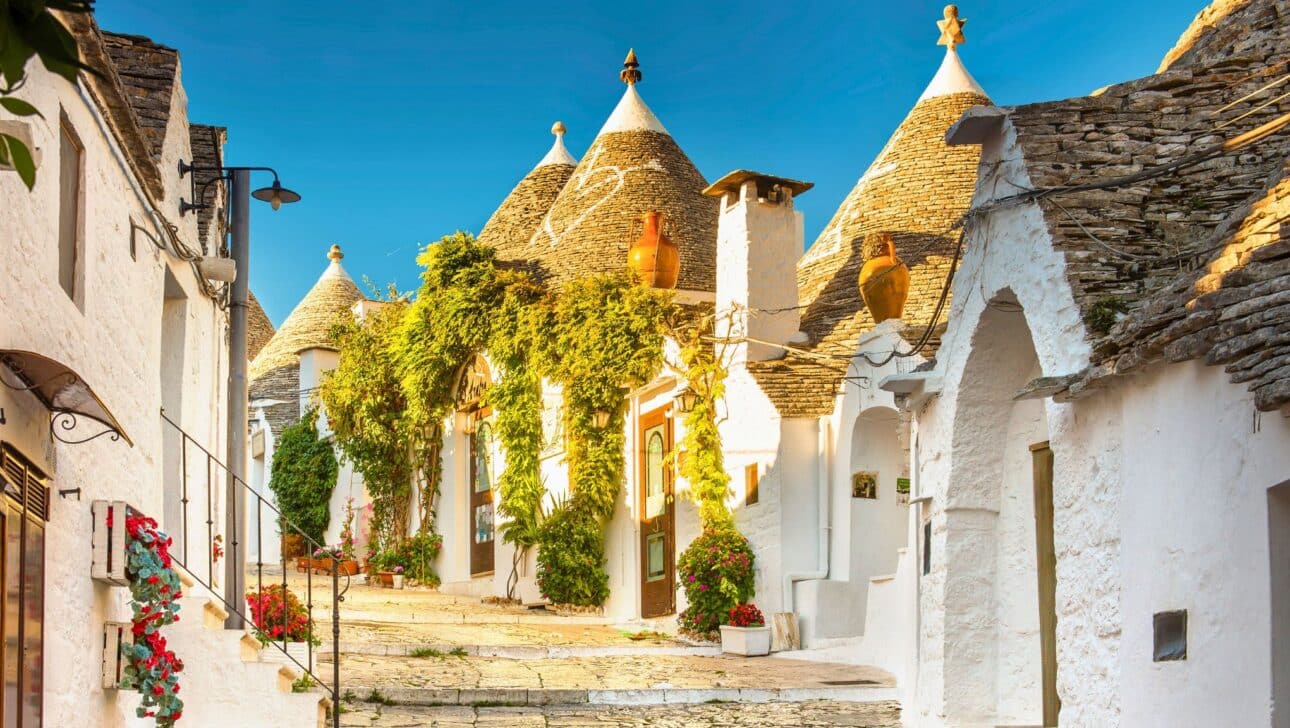
If you ever wanted proof that tax policy can shape architecture—and your Instagram feed—look no further than Alberobello, the tiny Puglian town where history, stonework, and a bit of medieval creative accounting produced one of Italy’s strangest and most beloved skylines. On a Classic Journeys-style walk through this part of southern Italy, Alberobello is the moment the landscape tips fully into fairy tale: hundreds of whitewashed, conical-roofed trulli clustered together like stone beehives, pizza ovens, or hobbit homes, depending on your level of caffeine and imagination.
Italy’s Most Charming Tax Dodge
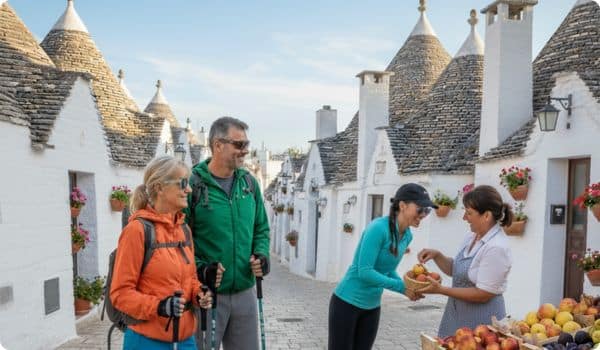
The trulli of Alberobello date back centuries, and they were never meant to be cute. Built without mortar using a dry-stone technique, the structures could be dismantled in a hurry, which turned out to be extremely convenient in an era when the Kingdom of Naples levied hefty taxes on every “permanent” house in a new settlement. Local feudal lords—most famously the Acquaviva family—encouraged farmers and laborers to live in these technically temporary homes so that when royal inspectors appeared, Alberobello could be transformed, at least on paper, from a village into a scatter of innocent-looking stone piles.
One oft-told story has it that in 1644, when a royal emissary arrived, the trulli were quickly taken apart, leaving nothing to tax but rubble. Whether or not that exact scene played out, the practice of building and unbuilding to outwit the kingdom’s tax collectors became part of local lore and explains why an entire town ended up looking like an architectural experiment in plausible deniability. By 1797, King Ferdinand IV of Bourbon granted Alberobello royal city status and ended the feudal arrangement, but by then the conical houses were rooted in the town’s identity. Today they are not only legal, but protected by UNESCO, and you can sleep in one, shop in one, or order a spritz under one and toast the ingenuity of long-gone peasants who refused to let the tax man dictate their floor plans.
Symbols, Superstition and Rooflines
Walk the lanes of Rione Monti and Rione Aia Piccola—the main trulli districts—and you start to notice that the story isn’t just about stone and taxes. Chalk symbols decorate many of the rooftops: crosses, hearts, stars, zodiac signs, and mysterious markings whose meanings seem to expand or contract depending on which local guide you ask and how many glasses of primitivo you’ve had. Some are Christian, some pagan, some purely decorative; all contribute to the sense that these homes belong in a children’s book or a film storyboard rather than on a property register.
Inside, the trulli are surprisingly practical: thick stone walls keep interiors cool in summer and snug in winter, while the vaulted cone overhead makes even a modest room feel like a private chapel. For travelers, that practicality reads as charm; you can duck into trullo boutiques selling ceramics and linens, sip an espresso in a café carved out of a cone-shaped shell, and climb to viewpoints where rooftops ripple away from you like a field of gray stone mushrooms. It’s one of those rare places where you put your phone away for a moment, then immediately take it back out again because it seems unreasonable not to photograph everything.
From Trulli Huts to Cave Cities
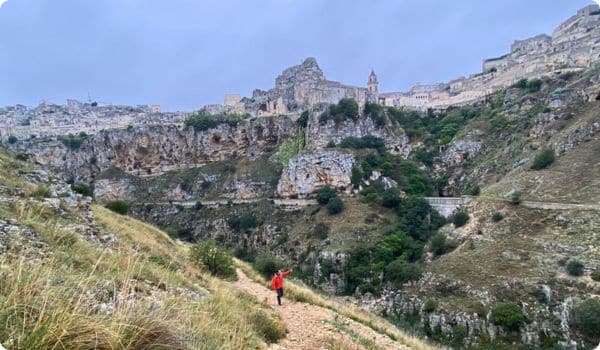
Alberobello may be the star of Puglia’s “most-searched” list—type “Puglia trulli” into any search bar and you’ll see why—but it’s only one chapter in the region’s love affair with unconventional housing. On the same Classic Journeys itinerary, another name keeps appearing in travelers’ research: Matera, the cave city just over the regional border that’s often paired with Puglia in guides and trip plans.
Where Alberobello builds upward in whimsical cones, Matera digs in. Its Sassi districts are carved straight into the soft tufa rock of a ravine, a honeycomb of cave dwellings, rock churches, cisterns and passages inhabited in some form since prehistoric times. Recognized by UNESCO in 1993, the Sassi of Matera are frequently described as one of the world’s oldest continuously inhabited settlements, with a story that runs from Bronze Age caves to postwar poverty and then to a careful revival that turned many grottoes into stylish cave hotels and restaurants.
Walk through Matera with a knowledgeable guide and you see both extremes: reconstructed cave homes with low beds, soot-blackened ceilings and simple tools that show how cramped and unsanitary life once was, and, a few steps away, glowing boutique hotels where the same stone walls now host candlelit dinners and spa tubs. It’s a reminder that in southern Italy, yesterday’s hardship often ends up as tomorrow’s design trend—and that the line between “heritage site” and “neighborhood” is always a bit blurred.
Puglia’s Most-Searched Towns (and What’s on the Table)
Look at what people actually search for—“Alberobello trulli,” “Matera caves,” “Lecce Baroque,” “what to eat in Puglia,” “best towns in Puglia”—and a pattern emerges: travelers want places that are visually arresting and deeply rooted, but they also want to know what’s for dinner. Alberobello answers both questions neatly. After you’ve heard the tax-dodge tale and decoded a few rooftop symbols, you’re never more than a short stroll away from a plate of orecchiette dressed with local vegetables or a panino stuffed with salumi and cheese, eaten on a bench overlooking the trulli.
Matera does the same with a different flavor profile. The search phrase “Matera where to eat” tends to lead people to cave restaurants and bars overlooking the ravine, where menus might feature thick slices of nearby Altamura bread, robust soups, and pastas paired with wines from Basilicata and Puglia. In Lecce, “what to eat” usually returns pasticciotto—the city’s signature custard-filled pastry—and a map of where to find the best ones among its Baroque streets. In all these places, architecture and appetite are in constant conversation.
Why These Odd Places Make Such Emotional Sense
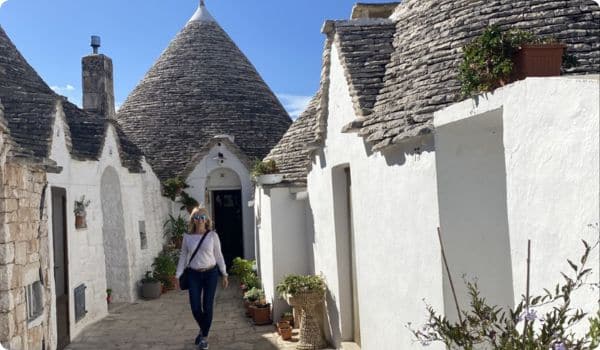
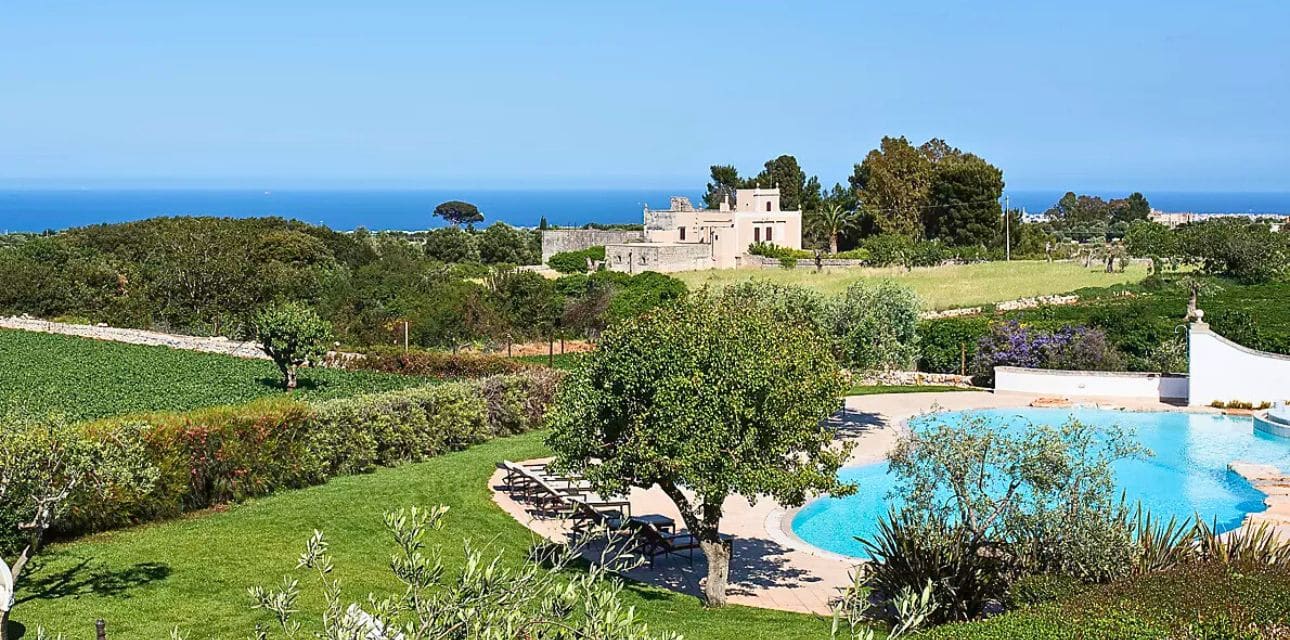
Travelers fall for Alberobello and Matera for the same reason they fall for Puglia’s other headliners—Ostuni’s whitewashed hilltop, the sea cliffs of Polignano a Mare, or the golden stone of Lecce. They are undeniably beautiful, but they are also slightly odd, bearing the imprint of longago solutions to problems that no longer exist: how to duck a tax bill, how to carve a home into a ravine, how to stay cool when summer never quite gets the memo to end.
Walk through Alberobello with the tax story in your back pocket, then sit down to a plate of orecchiette and a glass of local wine, and the town becomes more than a backdrop—it becomes a case study in stubborn creativity that just happens to be wildly photogenic. Add Matera’s cave-city drama and the flavors of Puglia’s kitchens, and you start to understand why so many travelers type “Puglia” into a search bar and come away with an itinerary full of trulli, Sassi, masserias and olive groves. These are odd places that make emotional sense: whimsical to look at, deeply livedin once you scratch the surface, and always—always—within easy reach of something delicious.