The Nakasendo Way began as a serious piece of statecraft and logistics, but walking it today feels more like drifting through a very gentle time warp—with the occasional samurai procession slipping through your imagination between one cedar trunk and the next. On Classic Journeys’ Japan Cultural Walking Tour, the trail reveals itself not as a museum piece, but as a livedin thread tying together daimyo pageantry, village gossip, forest stewardship, and your own very modern sore calves.
From mountain footpath to shogun superhighway
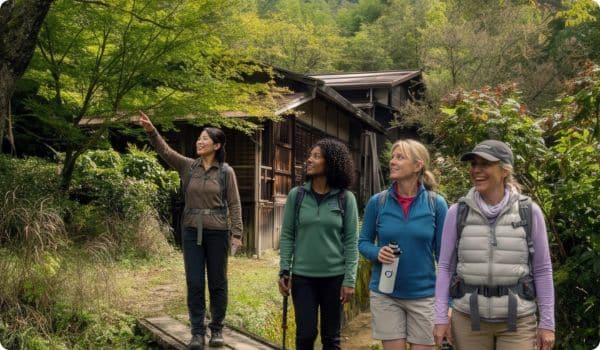
Long before guidebooks started rhapsodizing about “ancient samurai routes,” there was simply the need to get from one valley to the next without falling off a cliff. Parts of what became the Nakasendo trace older mountain paths used by traders, pilgrims, and messengers moving through central Honshu’s interior long before the Tokugawa shoguns took power in 1603. But it was the Edo period, with its obsession for order and control, that turned these routes into one of Japan’s five great highways, the Gokaidō—and elevated the Nakasendo, the “central mountain road,” to strategic importance.
Unlike the Tokaido, which hugged the Pacific coast and involved multiple river crossings, the Nakasendo threaded through the spine of the Japanese Alps, linking Edo (Tokyo) to Kyoto entirely on land across roughly 530–540 kilometers. Along its length, 69 shukuba—post towns—sprang up to feed, house, and occasionally fleece the endless parade of travelers: merchants, porters, pilgrims, and, most dramatically, the processions of samurai and their feudal lords.
Samurai on parade (and under surveillance)
By the time your Classic Journeys guide has you settled into the rhythm of the trail, you’ve probably heard the phrase sankin kōtai—the “alternate attendance” system that quietly underwrote the Nakasendo’s golden age. Under Tokugawa rule, the daimyo were required to spend alternating years in Edo and in their home domains, with wives and heirs effectively held in the capital as highstatus hostages. Every transfer meant a massive, meticulously choreographed procession up or down the Nakasendo: armored samurai, lacquered palanquins, porters, scribes, and cooks, all marching to keep the shogun happy and rebellion unthinkable.
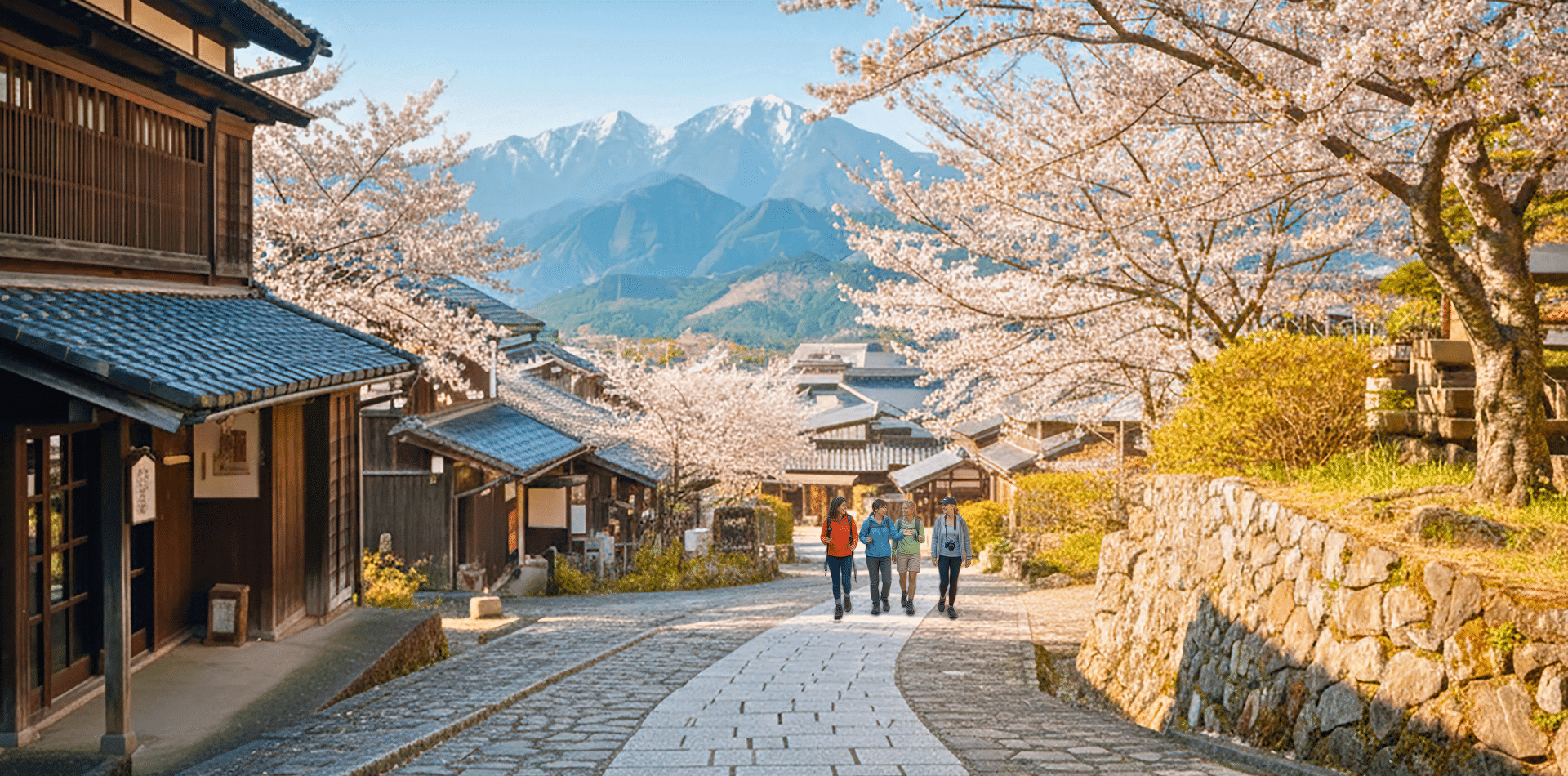
Those scenes are easy to conjure when you walk into Narai, where this itinerary spends a night. Once one of the wealthiest post towns on the route, Narai’s long main street of dark-timbered inns and merchant houses feels astonishingly intact; it really does look like the kind of place where a daimyo’s retinue might thunder through, leaving gossip and coins in its wake. Your guide points out old signage boards, warehouses, and bridges that once watched over the comings and goings of warlords and their retainers, while you arrive with nothing more threatening than trekking poles and a daypack.
Ninjas in the margins
And what of ninjas? The Nakasendo’s lore is dominated less by blackclad spies and more by the very public, very ceremonial traffic of feudal power. Ninja clans were more strongly associated with regions like Iga and Koga to the south; if any covert operators moved along the Nakasendo, they did so in deep disguise, folded into merchant caravans or minor retinues rather than leaping from rooftops. Still, as you follow a mossedged stone path between bamboo and cedar, it is hard not to imagine pairs of watchful eyes once tracking who passed, counting banners and armor, and carrying quiet reports back to someone higher up the mountain.
Your Classic Journeys guide tends to lean into the history that can be documented—daimyo processions, shogunate edicts, posttown records—while leaving just enough mystery in the air that a rustle in the undergrowth might, if you like, belong to a phantom scout rather than a pheasant.
Forests the samurai protected
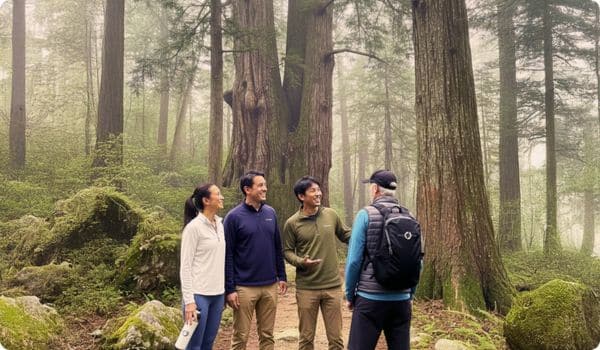
If Day 3 on this itinerary puts you in the “footsteps of samurai” on the Nakasendo, Day 4 shows you the forests that their era protected, often for entirely practical reasons. Akasawa Natural Recreational Forest, where you practice shinrin yoku (forest bathing), exists in its present, cathedral-like state because Tokugawaera rulers recognized the economic and strategic value of its straight, rotresistant Kiso hinoki cypress. Feudal authorities tightly controlled logging here, reserving timber for castle construction and sacred architecture; centuries-old management practices laid the groundwork for what is now presented as conservation and wellness tourism.
The irony is delightful: the same trees once destined to become keep walls and shrine beams now invite you to stand still, breathe deeply, and listen to the wind. On the Classic Journeys walk, your guide might point out old logging relics or boundary markers, then fall silent to let you notice the sound of a stream or the texture of bark under your palm. It is a neat narrative arc—from resource to refuge—that you can feel in your lungs as much as you understand with your head.
From highway of obligation to trail of choice
As Japan modernized in the late nineteenth century, railways and new roads stole the Nakasendo’s traffic. Many post towns declined; some reinvented themselves as ordinary villages with concrete shopfronts and vending machines, their Edoperiod façades stripped away. But stretches in the Kiso Valley—Narai, Tsumago, Magome—chose a different path, preserving and, later, consciously restoring their wooden streetscapes.
In the 1960s and 70s, residents of Tsumago famously rejected intrusive development, burying power lines and setting strict rules on signage and building exteriors to recreate the feel of a samuraiera town. Today, those efforts mean that when you walk the Magome–Tsumago section with Classic Journeys, the wooden façades, stone paths, and low eaves aren’t themepark replicas—they’re the result of decades of local argument, pride, and careful compromise.
Where daimyo once marched under obligation, you now stroll under curiosity. You stop to buy gohei mochi or buckwheat soba, read bilingual history boards, and maybe ring a bear bell on the forested stretch between towns. The drama is quieter, but not gone; it has simply shifted from politics to preservation, from fealty to storytelling.
The Nakasendo in the age of carryon luggage
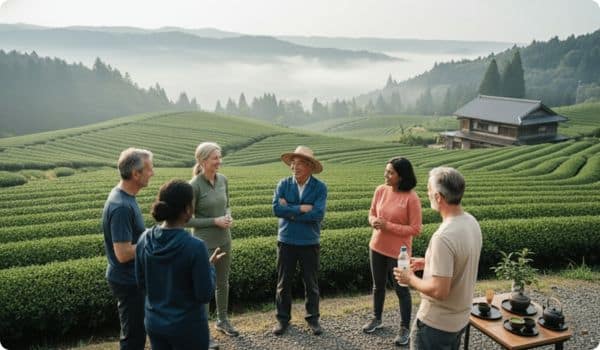
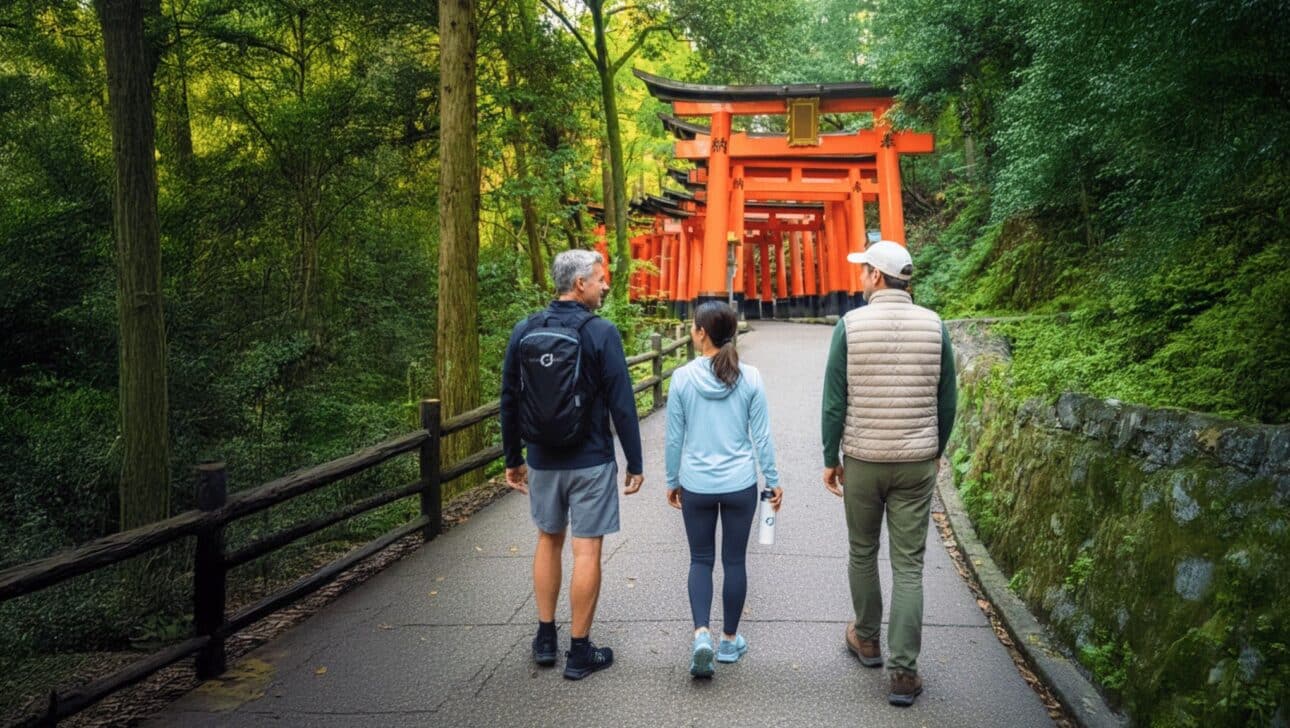
Modern Nakasendo hiking ranges from hardy multiday treks to gentle day walks; the Classic Journeys approach leans into the latter, favoring curated sections that best showcase the interplay of village, valley, and story. One day you might cover the Torii Pass between Yabuhara and Narai, climbing on soft forest paths where the old road stones still peek through, then descend into a street lit by lanterns instead of gas lamps. Another, you follow farm lanes and shaded woods between Tsumago and Magome, trading greetings with locals hanging laundry or tending gardens where packhorses once trudged.
This selective sampling is very much in the spirit of contemporary travel writing—and of Classic Journeys’ ethos. Rather than ticking off “the full 540 kilometers,” you drop into the narrative where it is most vivid, letting your guide braid in tales of feudal politics, local legends, and their own memories of growing up near the trail. Evenings are spent not on tatami in a crowded common room with snoring strangers, but in small inns and boutique hotels where baths are hot, futons are thick, and dinners tell their own regional stories plate by plate.
Still a road between worlds
What makes the Nakasendo so captivating—and so blogworthy—is that it continues to be exactly what its name promises: a “middle road.” Geographically, it threads between coasts; historically, it sits between courtly Kyoto and militarized Edo; experientially, it weaves between past and present, obligation and choice, infrastructure and idyll.
Walking it with Classic Journeys, that inbetween quality becomes the point. One moment you are listening to your guide explain sankin kōtai and imagining columns of armored retainers; the next, you are laughing with a shopkeeper about your attempt to eat oyaki without dropping crumbs on your hiking pants. You leave Narai at dawn to the sound of shutters opening, then find yourself that same evening gliding into Kyoto on the Shinkansen, scrolling through photos of mossy milestones and realizing that the distance between eras feels much smaller than the distance between stations.
The Nakasendo Way has carried warlords, pilgrims, porters, postal runners, school groups, and now small clusters of walkers who want to feel Japan at walking pace rather than window speed. Its stones remember the clatter of horses and the hush of straw sandals. Today, they also remember the squeak of hightech trail shoes and the occasional click of a camera set to “portrait mode.” Somewhere between those sounds is where your own story along the road settles in—a few days of following in samurai footsteps, imagining ninjas in the shadows, and discovering that the most radical thing you can do on a historic highway might just be to slow down and listen.