Scotland vs Ireland: How to Choose Your Trip
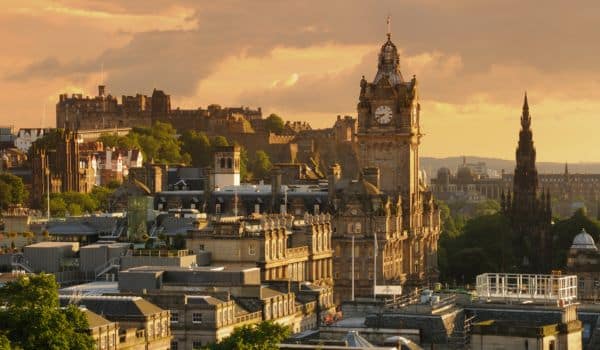
If you’re trying to choose between Scotland and Ireland, here’s my take: it usually comes down to whether you’re drawn to dramatic landscapes or lively local culture. That’s an oversimplification, of course, but it’s often the fastest way to tell which destination is a better fit.
Scotland feels bigger and wilder. Think Highland scenery, castle filled hillsides, and long stretches of countryside where it can feel like you have the landscape to yourself. Ireland tends to feel more social and intimate, with colorful villages, traditional music spilling out of pubs, and a culture built around conversation and hospitality.
Neither is the wrong choice. The better question is which experience sounds more like the trip you’re hoping to have.
Here’s how I think about the decision.
Scotland vs Ireland: How to Decide at a Glance
One thing I’ve noticed when talking to travelers about Scotland and Ireland is that people often think they’re choosing between two very similar trips. In reality, they usually know which destination they prefer after hearing a few descriptions.
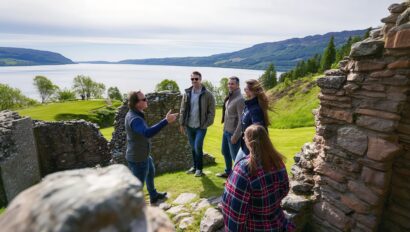
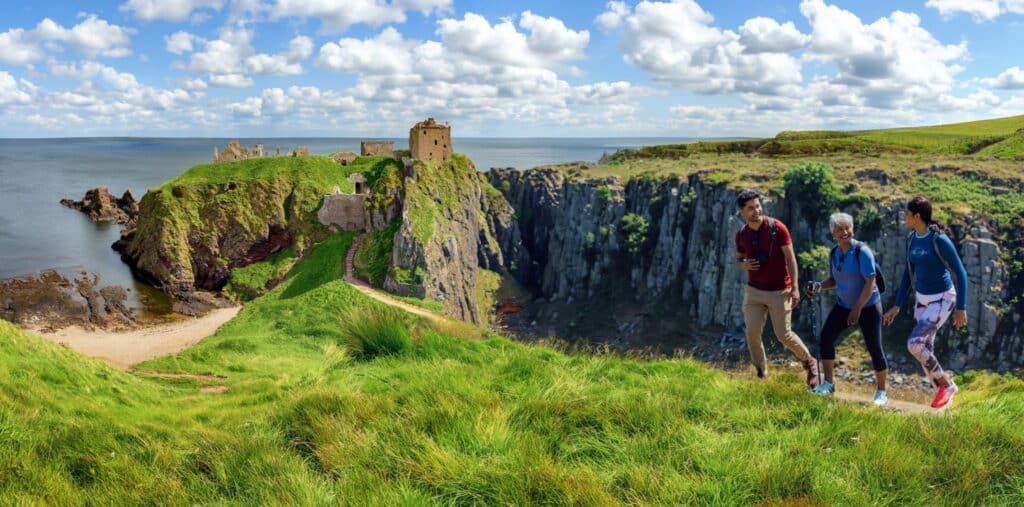
If the idea of walking beneath castle ruins, tracing winding roads through the Highlands, and feeling like you’ve stepped into a landscape that’s larger than life appeals to you, Scotland tends to win people over quickly.
If you’d rather spend your evenings in lively villages, listening to traditional music and chatting with locals over a pint, Ireland often feels like a natural fit.
In the Ireland vs Scotland conversation, Scotland often appeals to travelers drawn to dramatic Highland landscapes, castle history, and a greater sense of exploration across larger distances. Ireland offers beautiful scenery as well, but many visitors are especially drawn to its village atmosphere, coastal landscapes, and the ease of settling into local life.
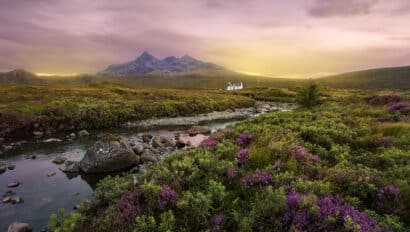
The good news is there is no wrong choice. Both countries reward travelers who enjoy exploring on foot, discovering regional traditions, and experiencing places through their landscapes, communities, and stories. The decision often comes down to whether you’re more inspired by Scotland’s rugged Highlands or Ireland’s village-centered charm.
Choose Scotland If You’re Seeking Dramatic Landscapes and Highland Adventure
If Scotland is the destination that makes you stop for photos, Ireland is often the destination that leaves you talking about the people you met long after you return home. Many travelers arrive expecting beautiful scenery and discover that the local culture becomes just as memorable as the landscapes.
That’s not to say Ireland lacks dramatic scenery. The Ring of Kerry delivers sweeping coastal views, Killarney National Park is filled with lakes, forests, and waterfalls, and the Beara Peninsula feels wonderfully remote.
But what often stands out most are the experiences that connect you to local life. On a typical day, you might find yourself chatting with a shepherd whose family has worked the land for generations, listening to stories from a boatman on the Killarney Lakes, or learning traditional chocolate making from a local artisan.
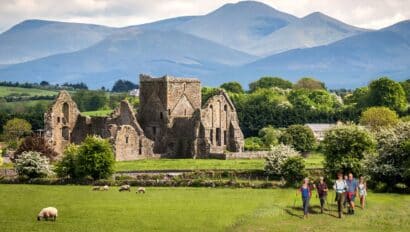
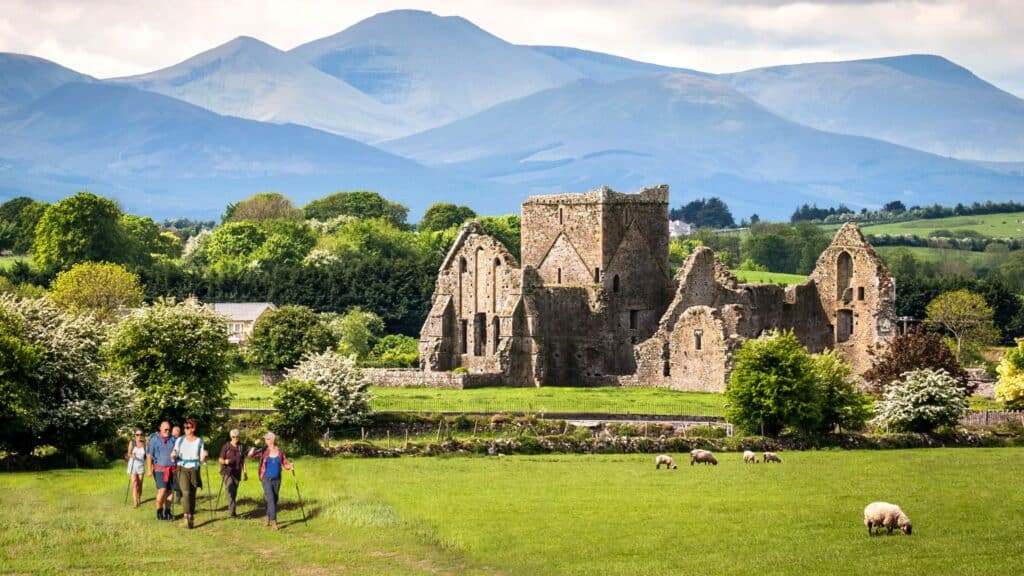
Ireland also has a way of making history feel approachable. Rather than grand castles dominating the landscape, many historical sites are woven into everyday life, from the ruins of Muckross Abbey to ancient stone circles and centuries old village traditions.
If you’re looking for a destination that combines beautiful scenery with genuine hospitality, fascinating local traditions, and experiences that feel personal, Ireland is an easy place to fall in love with.
Choose Ireland If You’re Seeking Warm Welcomes and Cultural Immersion
If Scotland is the destination that makes you stop for photos, Ireland is often the destination that leaves you talking about the people you met long after you return home. Many travelers arrive expecting beautiful scenery and discover that the local culture becomes just as memorable as the landscapes.
That’s not to say Ireland lacks dramatic scenery. The Ring of Kerry delivers sweeping coastal views, Killarney National Park is filled with lakes, forests, and waterfalls, and the Beara Peninsula feels wonderfully remote.
But what often stands out most are the experiences that connect you to local life. On a typical day, you might find yourself chatting with a shepherd whose family has worked the land for generations, listening to stories from a boatman on the Killarney Lakes, or learning traditional chocolate making from a local artisan.
Ireland also has a way of making history feel approachable. Rather than grand castles dominating the landscape, many historical sites are woven into everyday life, from the ruins of Muckross Abbey to ancient stone circles and centuries old village traditions.
If you’re looking for a destination that combines beautiful scenery with genuine hospitality, fascinating local traditions, and experiences that feel personal, Ireland is an easy place to fall in love with.
Can You Visit Both Scotland and Ireland on One Trip?
The good news for travelers comparing Scotland and Ireland is that you don’t necessarily have to choose. Thanks to short flights and ferry connections between the two countries, it’s entirely possible to visit both on the same trip.
The bigger question is whether you should.
If you only have a week, trying to fit both destinations into one itinerary can feel rushed. Scotland alone offers enough to fill a week between Edinburgh, St. Andrews, the Highlands, and Loch Ness. The same is true for Ireland, especially if you’re exploring Killarney, the Ring of Kerry, Kenmare, and the surrounding countryside. Trying to experience both countries in seven days often means spending more time in airports, trains, and rental cars than you’d probably like to.
For travelers with 10 to 14 days, combining Scotland and Ireland becomes much more realistic. You could spend several days exploring Scotland’s historic cities and Highland landscapes before continuing to southwest Ireland for coastal walks, village life, and the scenery of County Kerry. The countries complement each other well, giving travelers the chance to experience two very different sides of these neighboring countries in a single trip.
That said, there is something to be said for spending enough time in each destination to experience it properly. Many travelers find that choosing one country allows them to explore beyond the highlights and connect more deeply with the people, landscapes, and traditions that make the destination special.
If Scotland is currently at the top of your list, it’s worth spending some time thinking through which regions you want to prioritize, how long to stay, and how to balance cities, countryside, and the Highlands. Our guide on how to plan a trip to Scotland can help you build the right itinerary.
If your schedule allows, both Scotland and Ireland are worth experiencing. If time is limited, however, focusing on one country often leads to a more rewarding trip.
Travel Planning Tip
If you’re deciding between Scotland and Ireland for a one-week trip, choosing one destination often leads to a more rewarding experience. Both countries offer enough history, scenery, and cultural experiences to easily fill a week, while trying to fit both into a shorter itinerary can leave travelers spending more time in transit than enjoying the places they’ve come to see.
How Many Days You Need in Scotland or Ireland
If I had only a week and was trying to choose between Scotland or Ireland, I wouldn’t attempt to do both. That’s probably the biggest mistake I see travelers make when planning a trip to this part of the world. Both countries reward travelers who slow down, spend time in local communities, and leave room for unexpected discoveries.
Seven days is usually enough to experience the highlights of either destination without feeling rushed. It gives you time to explore beyond the major attractions, spend a few nights in one place, and experience the slower moments that often become the most memorable part of the trip.
If you have 10 to 14 days available, you’ll have more freedom to explore at a relaxed pace, venture beyond the best-known highlights, or even combine Scotland and Ireland into a single trip. Additional time often leads to some of the most memorable experiences, whether that’s lingering over a great meal, taking an unplanned detour, or spending extra time in a place you unexpectedly love.
No matter which destination you choose, giving yourself enough time to experience the landscape, history, and local culture will make for a far more rewarding trip.
If Scotland is at the top of your list, our guide on how to plan a trip to Scotland can help you determine the right itinerary length and regions to prioritize.
Cities and Regions Worth Building Your Trip Around
Both Scotland and Ireland are best experienced region by region rather than trying to see everything in a single trip. Most guided walking itineraries use one or two areas as a base, combining scenic walks, cultural experiences, and nearby highlights without requiring constant travel. Choosing the right region often shapes the entire feel of the trip.
Scotland: Edinburgh, St. Andrews, and the Highlands
If it’s your first trip to Scotland, Edinburgh is about as strong an introduction as you could ask for. The city’s medieval streets, historic architecture, and iconic castle offer an immediate sense of the country’s history and character. Walking along the Royal Mile or exploring the city’s Old Town provides a fascinating glimpse into centuries of Scottish history.
From Edinburgh, many itineraries continue north into the Highlands, a region known for its sweeping landscapes, mountain valleys, forests, and lakes. This is the Scotland many travelers picture before they arrive. Walking trails wind through places like Glen Affric and Cairngorms National Park, where ancient pine forests, wildlife, and panoramic views showcase the country’s natural beauty. Loch Ness is another popular stop, combining dramatic scenery with one of Scotland’s most famous legends.
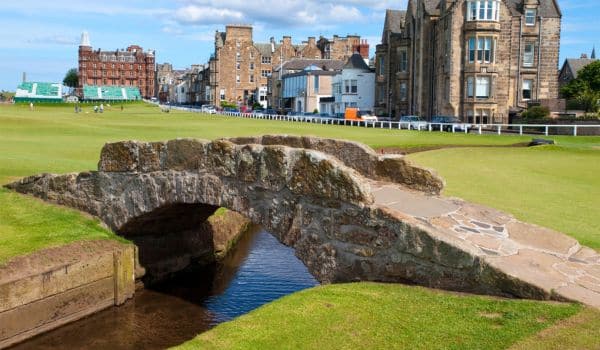
St. Andrews often surprises people. While it’s best known as the home of golf, many visitors leave talking about the coastline, historic ruins, and relaxed atmosphere as much as the famous fairways.
Best known as the home of golf, the town also features beautiful coastal scenery, medieval landmarks, and a relaxed atmosphere that contrasts nicely with the rugged Highlands. Visitors can walk sections of the coastline, explore the historic university town, and experience a side of Scotland that feels both elegant and approachable.
Other regions, including Glasgow and the Isle of Skye, are certainly worth considering, but Edinburgh, St. Andrews, and the Highlands provide an excellent foundation for a first trip to Scotland and capture many of the experiences that draw travelers to the country in the first place.
Ireland: Killarney, the Ring of Kerry, and Beyond
It’s easy to see why so many first time visitors gravitate toward southwest Ireland. Within a short drive of Killarney, you can spend the morning walking through a national park, the afternoon exploring a centuries old abbey, and the evening listening to traditional music in a local pub. Killarney makes an ideal base for experiencing the region, combining lively streets, welcoming pubs, and easy access to some of Ireland’s most beautiful landscapes. Just beyond town, Killarney National Park is home to lakes, forests, waterfalls, and walking trails, while nearby sites like Muckross Abbey and Ross Castle offer a glimpse into the area’s rich history.
The Ring of Kerry is one of Ireland’s most famous touring routes, but it’s about much more than the scenery. Along the way, travelers encounter coastal villages, working farms, island landscapes, and generations of local traditions. Places like Valentia Island, Derrynane Bay, and the surrounding Kerry coastline reveal why this region has become a favorite for visitors from around the world.
Nearby Kenmare offers a slightly different atmosphere. Smaller and quieter than Killarney, it’s the kind of town where it’s easy to spend an afternoon wandering the streets, meeting local artisans, and enjoying the slower rhythm of daily life. While many travelers also include Dublin or Galway in a broader Ireland itinerary, Killarney, Kenmare, and the Ring of Kerry provide a strong introduction to the landscapes, culture, and hospitality that make Ireland so memorable.
Getting Around: Driving, Distances, and Guided Alternatives
One of the biggest differences between planning a trip and actually taking one is understanding how much time you’ll spend getting from place to place. Both Scotland and Ireland are relatively compact compared to destinations like the United States or Canada, but travel can often take longer than visitors expect. Narrow country roads, winding coastal routes, and frequent photo stops tend to slow things down, in the very best way.
Many travelers choose to rent a car, particularly if they want the flexibility to explore smaller villages, scenic regions, and lesser-known corners of the countryside. However, both Scotland and Ireland drive on the left side of the road, which can take some adjustment for visitors from North America. Rural roads can also be surprisingly narrow, especially in remote areas where passing another vehicle sometimes requires patience and a bit of confidence behind the wheel.
Driving also means balancing sightseeing with navigation, parking, and daily logistics. While some travelers enjoy that independence, others find themselves spending more time focused on the road than the destination itself.
Guided tours offer an alternative that removes much of the planning and transportation stress. Rather than worrying about directions, travelers can focus on the landscapes, local culture, and experiences unfolding around them. Walking-focused itineraries are especially appealing because they combine active exploration with the convenience of having accommodations, transportation, and logistics handled for you. For many visitors, it creates a more relaxed way to experience Scotland or Ireland while still allowing plenty of opportunities for discovery.
Scotland vs Ireland Trip Itineraries to Consider
Looking at sample itineraries is often the fastest way to understand how a trip to Scotland or Ireland actually comes together. The examples below highlight some of the most popular routes in each destination, along with an option for travelers hoping to experience both on a single journey. Whether you’re drawn to Scotland’s Highlands or Ireland’s southwest coast, these itineraries can help clarify which experience feels like the better fit. For additional inspiration, explore Classic Journeys’ guided walking tours in Scotland and Ireland.
A Suggested Scotland Itinerary
A week in Scotland offers enough time to experience the country’s history, landscapes, and local culture without feeling rushed. Many travelers begin in Edinburgh, where a few days can easily be spent exploring the Royal Mile, Edinburgh Castle, and the city’s historic neighborhoods. The Scottish capital provides an excellent introduction to the country and its history.
From Edinburgh, continue north into the Highlands. This region is home to some of Scotland’s most memorable scenery, from mountain landscapes and ancient forests to winding roads that seem to reveal a new view around every corner. A visit to Glen Affric offers the chance to explore one of the most beautiful parts of the Highlands, while Culloden Moor provides insight into a pivotal moment in Scottish history.
No first trip to the Highlands feels quite complete without a visit to Loch Ness. Yes, the legends are part of the appeal, but the scenery is what usually leaves the bigger impression. The lake stretches for miles through the Highlands and makes an easy addition to a broader Scotland itinerary.
For the final portion of the trip, continue to St. Andrews on Scotland’s east coast. While best known as the home of golf, the town offers much more than famous fairways. Coastal walks, historic landmarks, and a lively university atmosphere make it a rewarding place to spend a few days before returning to Edinburgh for your departure.
This itinerary balances Scotland’s cities, countryside, history, and walking opportunities, making it an excellent choice for first time visitors looking for a well rounded introduction to the country.
A Suggested Ireland Itinerary
A week in Ireland is enough time to experience some of the country’s most beautiful scenery while also getting a feel for the local culture and traditions that make it so memorable. Many travelers choose to focus on the southwest, where some of Ireland’s most iconic landscapes and walking routes are found.
If someone asked me where to begin a first trip to Ireland, Killarney would be near the top of the list. It offers easy access to lakes, forests, waterfalls, and historic sites like Ross Castle and Muckross Abbey while still feeling like a lively Irish town rather than a tourist hub. It’s also the kind of town where you’ll find lively pubs, traditional music, and plenty of opportunities to connect with local culture.
From there, spend time exploring the Ring of Kerry, one of Ireland’s most scenic regions. Along the way, you’ll encounter coastal viewpoints, working farms, island landscapes, and small communities that showcase a different side of Irish life. Stops on places like Valentia Island and Derrynane Bay add even more variety to the journey.
Many travelers also choose to spend several days in Kenmare, a charming town that serves as a gateway to both the Ring of Kerry and the Beara Peninsula. Between scenic walks, local artisans, and beautiful countryside, it’seasy to see why so many visitors end up wishing they had more time here.
This itinerary offers a wonderful introduction to Ireland, combining natural beauty, local traditions, historic sites, and the kind of memorable experiences that often become the highlight of the trip.
Combining Scotland and Ireland on One Trip
If you have 10 to 14 days available, combining Scotland and Ireland can make for an unforgettable trip. A common approach is to begin in Scotland, spending time in Edinburgh and the Highlands before taking a short flight to Ireland. From there, focus on one region rather than trying to see the entire country. Southwest Ireland, including Killarney, Kenmare, and the Ring of Kerry, pairs particularly well with a Scotland itinerary.
The key is to avoid overloading your schedule. With enough time and realistic expectations, it’s possible to experience the highlights of both countries without feeling rushed.
Final Thoughts on Choosing Your Trip
If you’re still deciding between Scotland and Ireland, try picturing your ideal day.
If that day involves Highland scenery, castle ruins, dramatic coastlines, and the feeling that adventure could be waiting around the next bend in the road, Scotland is probably the better fit.
If you’re imagining colorful villages, traditional music, conversations with locals that stretch longer than planned, and a culture that seems to welcome you in immediately, Ireland may be calling your name.
The good news is that there isn’t a wrong choice. Both destinations reward travelers who explore on foot and make time for the people, traditions, and landscapes that give a place its character. Whether you choose Scotland, Ireland, or eventually visit both, you’ll come home with stories worth telling.
If you’re ready to start planning, explore Classic Journeys’ guided walking tours and find the itinerary that’s right for you.